Our Blog

What Are Teeth Made Of?

April 13th, 2017

Did you know that teeth are composed of four primary layers? Each layer plays a pivotal role in supporting a strong smile and a healthy mouth. Below, we discuss the four primary layers that make teeth and their primary purposes.


Enamel

Enamel is the outer most layer of the tooth that protects teeth from the elements that cause cavities. It is the hardest surface in the human body and the first line of defense against cavities. It is the visual surface of the tooth, and usually stops around the gum line.  Think of enamel as a barrier that shields your teeth from harm.

Dentin

The layer directly beneath enamel is dentin, which is made up of microscopic tubes! It is a sensitive layer that surrounds pulp, and plays a pivotal role in communicating sensations from the surface of your teeth to the nerves inside your teeth. Without dentin, our teeth wouldn’t feel the difference between ice cream and hot soup!

Cementum

Cementum is layer between the root of teeth and gums. It is primarily beneath the gum line, and helps anchor teeth to the bones in the jaw. Cementum is really cool because it can actually repair itself! Think of Cementum as the foundation of a home that keeps the house (tooth) grounded and secure. 

Pulp

Dental pulp is the living tissue at the core of teeth, and acts as an alarm bell that sends signals sent from the dentin to the brain. Pulp is soft and contains a large network of nerves and blood vessels. It is the most sensitive and important part of teeth, and can be very sensitive if it is ever exposed.

Protect Your Teeth

If your enamel becomes damaged then the different layers of your teeth are exposed to increasing harm. The best way to protect your teeth is by brushing twice per day for two minutes at a time. Additionally, you should floss once per day, and try to drink more water – which helps produce saliva and clean teeth.

If your child suffers from tooth sensitivity, or complains of gum pain, then visit our office. Dental cavities are the most prevalent –and preventable – disease that affects children. Visit our office so that we can evaluate your child’s oral health, and outline a plan to help them achieve optimal oral health.

Your Kids can be Cavity-Free with These 6 Steps

March 30th, 2017

Tooth decay is the most common childhood disease, and what’s worse is that 20% of children’s cavities are left untreated. But there’s good news: cavities are nearly 100% preventable. Follow these steps to prevent cavities in your children’s teeth, and save a trip to the dentist!

Pick a Dental Home by Age One

Pediatric dental offices like ours seek to foster a fun and inviting environment that is specifically designed for children. Pediatric dentists have had 2-3 years of special training to care for young children and adolescents. Choose a pediatric dental home for your child before their first birthday to establish a consistent oral care routine, and prevent cavities.

Begin a Good Cleaning Routine Early

Just because your toddler doesn’t have teeth doesn’t mean you shouldn’t clean their mouth! You can clean toddler’s gums with a clean, damp cloth by gently running away residual food. By doing this, you are actually improving the health of the baby teeth that will soon erupt, and familiarizing them with oral care early in their life.

Brush and Floss with Them

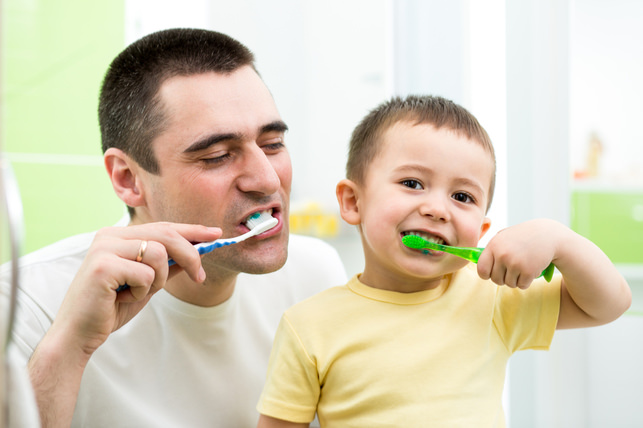
A great way to get your children to brush and floss is by brushing with them! It’s a fun way for you to guide them into a healthy brushing routine, and it also gives you the chance to monitor their progress and brush time. Additionally, it helps everyone involved become more accountable for their mouth care!

Avoid Sugary Drinks

When left on your teeth, sugar gives bacteria the food it needs to thrive and create cavities, which is why you should avoid sugary drinks. Beverages like soda, fruit juice and sports drinks contain high amounts of sugar that damage teeth, and affect your overall health. Try giving your children water to cut back on the amount of sugar they intake.

Limit Starchy Foods

Crackers, potato chips and other starchy foods can get stuck in the small areas of tooth surfaces.  Without proper brushing, these foods provide sugar to bacteria that feed on it which ultimately leads to tooth decay. If they do eat starchy foods, have them floss and brush approximately 30 minutes after their meal. They can also swish cool water to get rid of starchy food debris.

Add More Dairy to Your Child’s Diet

Enamel is the first line of defense for teeth, so it’s important to keep it strong. Dairy products neutralize damaging acids that eat away teeth and are rich in casein, an enamel protecting substance. Give your kids healthy dairy products like milk, non-fat greek yogurt or cheese with every meal to boost their enamel strength.

Detect Cavities Early

Tooth decay is painful and can affect the overall health of developing mouths, which is why early treatment is the best way to handle cavities. Routine checkups every six months are the best way to stay on top of your child’s oral health.

Schedule an appointment with our office today to check your children’s cavity status, and to begin them down the path to a healthy smile.

6 Dental Emergencies that Require a Trip to the Dentist

March 16th, 2017


It can be scary when your child gets hurt or has an accident. As a parent, you’re equipped to handle a bruise or a scrape, but what about a broken tooth? Do you know how to handle a lost permanent tooth? When it comes to the following dental emergencies, it’s best to take your child to the dentist.

1- Fractured Tooth
Fracturing a tooth is almost like a childhood rite of passage. Kids play rough, and sometimes, their teeth bear the brunt of their actions. If your child fractures a tooth, then gather what fragments and store them in a clean container of cool water, saliva, or milk. It is important that you visit the dentist immediately to prevent infection and other complications that are brought on by chipped teeth. Your dentist will be able to repair your child’s tooth, or fix it with a crown. In the meantime, have your child rinse their mouth with warm water if they are experiencing any pain.

2 - Tongue or Cheek Injury with Excessive Bleeding
Chewing on the tongue or inside of the cheek is a habit that is common in children and teens. Usually, bleeding can be stopped by applying clean gauze to the affected area. However, sometimes regular chewing can lead to excessive bleeding. If your child has an open oral wound, then they are more susceptible to infection. You should visit your dentist if your child experiences bleeding on their tongue or inner-cheek that lasts longer than 48 hours to prevent infection and stop the bleeding.

3 - Persistent Tooth Ache
If your child has a tooth ache, then have them rinse their mouth with warm water to ease the pain. If the pain persists for more than 48 hours, then see your dentist as soon as you can. Persistent tooth aches can indicate more serious problems that need to be observed by a dental professional.

4 - Knocked out Baby Tooth
If a baby tooth is knocked out too soon, it can lead to teeth crowding the vacant spot. This can cause alignment issues when the permanent tooth begins to emerge, and could lead to crooked teeth and biting problems. Visit your dentist within 24 hours if your child prematurely loses a baby tooth. Your dentist will be able to check the incoming adult tooth, and provide your child with a spacer if necessary to prevent any crowding that may occur.

5 - Knocked or Lost Permanent Tooth
If your child loses a permanent tooth, then it is imperative that you visit your dentist immediately. Store the tooth in a clean container of cool water, milk, or, use a tooth preservation system like the ADA Approved Save-A-Tooth. If the dislodged tooth is stored properly, then your dentist may be able to reinstall it.

6 - Objects That Won’t go Away
This is a less common problem, but still very serious: if something becomes lodged in between your children’s teeth, beneath their gum line or impacts the surface of their gums, then visit the dentist. When an item gets stuck in any of those areas, it can cause serious damage. Objects stuck in the mouth can cause, pain, swelling and infection, not to mention plaque and cavities. If you can’t get rid of the obstruction by brushing and flossing, then visit our office so that we can dislodge it.

If in Doubt, Visit Our Office
If your child has lost their teeth from serious accidents like a head injury or broken jaw, then visit the hospital before you see the dentist. It’s absolutely imperative that you care for the more serious injury first. However, if their oral emergency is not immediately threatening their overall well-being, then call our office. We are equipped to deal with a litany of oral emergencies and will be able to help your child’s smile back in working order. 

The Mystery of the Colorado Brown Stain and the History of Fluoride

March 2nd, 2017

The Center for Disease Control has called community water fluoridation one of the 10 great public health achievements of the 20th century. This is due to its effectiveness, and low cost. In fact, the American Dental Association, American Academy of Pediatrics, US Public Health Service, and World Health Organization all advocate for fluoridating community water supplies. But, we haven’t always reaped the oral-health benefits of fluoride. Actually, until recently, we haven’t even fully understood the full scope of fluoride. It wasn’t until the early 1900’s that we began studying fluoride, and incorporating it into our health toolbox.

Colorado Brown Stain

In 1901, a young dental school graduate named Frederick McKay moved to Colorado Springs, Colorado to open a dental practice. Upon his arrival, he was astounded to observe that many of the locals suffered from brown stains on their teeth. Sometimes, these stains were so dark that it appeared as if their teeth were caked in dark chocolate. After observing this, McKay frantically searched for information about the disorder causing the stains.

Teeth mottling (dental fluorosis)

McKay invited a renowned dental researcher named Dr. G.V. Black to help him get to the root of the stain affecting those in Colorado Springs. In 1909, Black accepted the invitation and arrived in Colorado. For six years, the two worked together and found that nearly 90% of children native to Colorado Springs suffered from the stain. They gave the brown stain a more technical name (tooth mottling, which was later changed to fluorosis) and were surprised to discover that mottled teeth were highly resistant to tooth decay. While they couldn’t identify a cause for tooth mottling, they noted the anti-cavity effects of the stain and moved on.

A Trip across the Rockies

McKay was ever-vigilant in his quest to solve the brown stain issue. So much so, that in 1923 he went from Colorado Springs to Oakley, Idaho to investigate a recent uptick in tooth mottling in Oakley. The parents told McKay that the stains began appearing shortly after Oakley constructed a communal water pipeline to a warm spring five miles away. After examining and finding the water to be normal, McKay advised town leaders to abandon the pipeline and use a nearby spring as their water source. The town obliged, and within a few years the brown stains disappeared.

McKay still hadn’t found the exact cause, but he isolated the source of tooth mottling.

An Arkansas Aluminum Town

McKay then travelled to Bauxite, Arkansas, a town owned by an aluminum plant called the Aluminum Company of America (ALCOA). The residents of Bauxite were afflicted with mottled teeth, but nearby towns were not. McKay asked the town to conduct a study on the water, and returned to Colorado.

ALCOA’s chief chemist, H.V. Churchill, analyzed the water with more powerful tools than available to McKay when he was in Oakley. Several days after the study was conducted, Churchill found high levels of fluoride in the water at Bauxite. At first, he couldn’t believe it, and order a new sample. The second test showed the same results and compelled Churchill to write a 5 page letter to McKay.

The letter informed McKay of the fluoride findings, and Churchill urged him to test samples from Colorado Spring and Oakley for increased levels of fluoride. McKay obliged, and within months, he found the answer to the brown stain problem: increased levels of fluoride were in fact staining teeth.

National Institute of Health

After learning of McKay and Churchill’s findings, the National Institute of Health (NIH) decided to investigate water-borne fluoride, and the effects on teeth. Drs Trendley Dean and Elias Elvove first came up with a method to measure fluoride levels in water. Together, they developed a state-of-the-art method to measure fluoride levels in water with an accuracy of 0.1 parts per million (ppm). By the late 1930’s the NIH concluded that fluoride levels up to 1.0 ppm could not cause enamel fluorosis.

What about Cavity Protection?

Upon finding that miniscule amounts of fluoride would not stain teeth, the NIH went back to McKay’s writings where he observed the cavity resistance of those with the brown stain. Dean wondered whether adding fluoride to drinking water at physically and cosmetically safe levels would help fight tooth decay. This hypothesis, Dean told his colleagues, would need to be tested. In 1945, Grand Rapids Michigan voted to add fluoride to its drinking water. The 15 year study would be the first of its kind. After just 11 years, Dean announced that the cavity rate among children in Grand Rapids had dropped more than 60%. This was a major scientific breakthrough and helped revolutionize dental care.

Fluoride Today and in the Future

Today, fluoride is widely acknowledged as a way to prevent cavities. In the United States, community water fluoridation costs just over 1 dollar per person every year, which is a low price to pay for better oral health. Check online to see if your town uses a fluoridated water source. If not, we suggest buying fluoridated toothpaste to get your daily dose of cavity-preventing fluoride.